A Crash Course to Starting with Acrylics: You CAN Paint!
Have you ever stood in the art supply aisle, looking at rows of brightly colored paint, clean white canvases, and brushes in every imaginable shape—and felt excited by the possibilities?
Maybe you brought a few supplies home.
You imagined sitting down with a cup of coffee, placing a blank canvas in front of you, and spending a quiet afternoon creating something beautiful.
But then you opened the paint.
You picked up a brush.
And suddenly, you had no idea what to do next.
How much paint should you use?
Should you wet the brush first?
Which color should go on the canvas first?
How do artists blend colors without turning everything into a muddy brown?
And how do you take a completely blank canvas and somehow turn it into a finished painting?
When you do not know the answers to those questions, it is easy to put the supplies away and decide that painting simply is not for you.
But that does not mean you cannot paint.
It only means no one has shown you where to begin.
That is why I created the Beginner Acrylic Painting Crash Course.
This course is designed specifically for first-time and beginner painters who want a clear, comfortable introduction to acrylic painting.
You do not need painting experience.
You do not need drawing skills.
And you certainly do not need to identify as an artist before you begin.
You simply need to be willing to pick up a brush and try.
Painting Is Not a Talent You Either Have or You Do Not
Many adults believe creativity is something people are born with.
They imagine that artists have always known how to draw, choose colors, control their brushes, and create beautiful images.
But every artist began with a first painting.
Every artist has mixed a color that did not work, used too much paint, struggled with a brush, or looked at an unfinished canvas and wondered how it would ever come together.
Painting is not a mysterious gift reserved for a select group of people.
Painting is a collection of skills.
You can learn how to load paint onto your brush.
You can learn how to mix colors.
You can learn how to create a soft background, build layers, add texture, and make different types of marks.
You can learn how to look at a finished image and break it into smaller, more manageable pieces.
And just like any other skill, painting becomes more comfortable through practice.
You do not have to master everything at once.
You learn one brushstroke, one color mixture, and one layer at a time.
A Clear Place to Begin
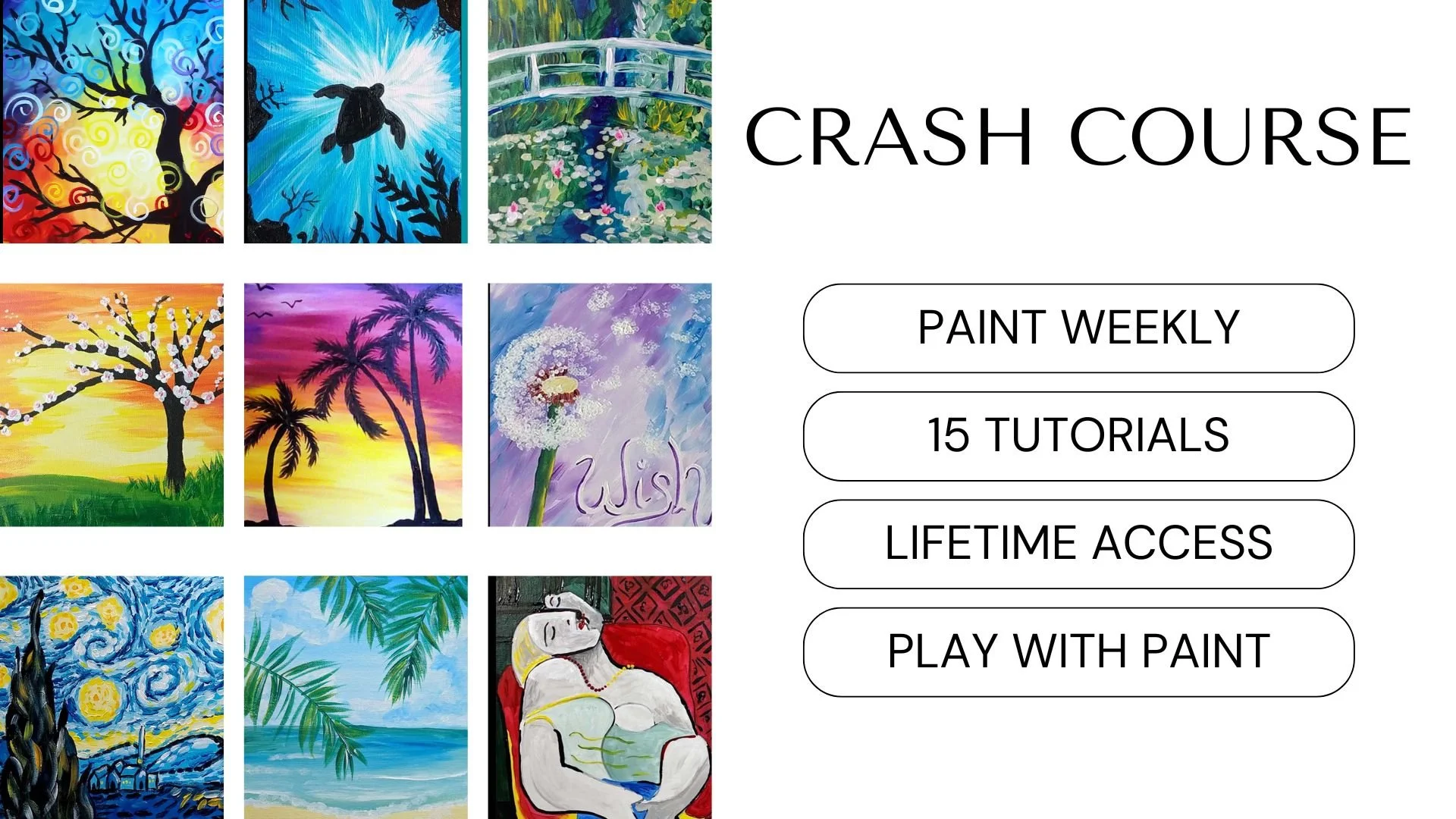
The Beginner Acrylic Painting Crash Course includes 15 complete, step-by-step painting tutorials.
Each project is designed to help you practice important acrylic painting techniques without making the process feel overwhelming.
Instead of staring at a blank canvas and trying to figure everything out on your own, you will have a project to follow and a clear sequence of steps.
You will begin with the background.
Then you will add the larger shapes.
You will gradually build layers, introduce additional colors, and move toward the smaller details that bring the painting to life.
As you work through the projects, you will practice brush control, color mixing, blending, layering, composition, and finishing an entire painting.
These are not skills you need to understand before beginning the course.
They are the skills you will develop by completing the course.
You Do Not Need to Know How to Draw
One of the most common things I hear from new painters is, “I cannot draw.”
Many people assume that if they cannot draw an image freehand, they will never be able to paint it.
But drawing and painting are different skills.
You do not need to sit in front of a blank canvas and perfectly sketch the entire image from memory.
Printable traceables are included with the course projects. These allow you to transfer the main shapes onto your canvas before you begin painting.
Once the basic outline is in place, you can focus on learning how to use your paint and brushes.
This removes some of the pressure and gives you a helpful structure to follow.
Over time, you may become more confident adjusting the shapes, changing the colors, or adding your own creative details.
But when you are beginning, it is completely acceptable to use tools that make the learning process easier.
The goal is not to prove that you can do everything without assistance.
The goal is to learn.
What Acrylic Paint Actually Feels Like
There is something satisfying about working with acrylic paint.
The colors can be rich and vibrant.
The paint moves beneath the brush, leaving behind visible marks that slowly begin to form an image.
Acrylic paint also dries relatively quickly, which allows you to build one layer over another.
At first, that quick drying time may feel unfamiliar. You may wonder why the paint is not blending the way you expected or why one area needs another coat.
But as you practice, you begin to understand how the paint behaves.
You learn how much paint to place on your brush.
You begin noticing the difference between a heavily loaded brush and one carrying only a small amount of color.
You discover how a flat brush can create a broad, strong shape, while a small pointed brush can create thin lines and delicate details.
You begin understanding when to blend wet paint and when to allow a layer to dry before painting over it.
These small discoveries are what begin turning unfamiliar supplies into comfortable, useful tools.
You Can Learn at Your Own Pace
Learning something new can be difficult when you feel pressured to keep up with everyone around you.
In a group class, you may worry that another painter is moving faster than you.
In an online video, you may feel as though the instructor is rushing through steps that are still new to you.
With this course, you can move at your own pace.
You can pause the lesson while you mix a color.
You can replay a demonstration.
You can step away, allow your painting to dry, and return later.
You can complete one project every week or spend a creative weekend working through several lessons.
There is no deadline.
The course includes lifetime access, so the lessons will be available whenever you are ready to paint.
You can also return to an earlier project months later and paint it again.
The second version may look completely different from the first—and that is one of the wonderful things about painting.
As your skills grow, your paintings grow with you.
You Do Not Need Expensive Supplies
Another reason people delay painting is the belief that they need an entire studio filled with professional art supplies.
You do not need dozens of brushes.
You do not need every paint color in the store.
You do not need the most expensive canvas available.
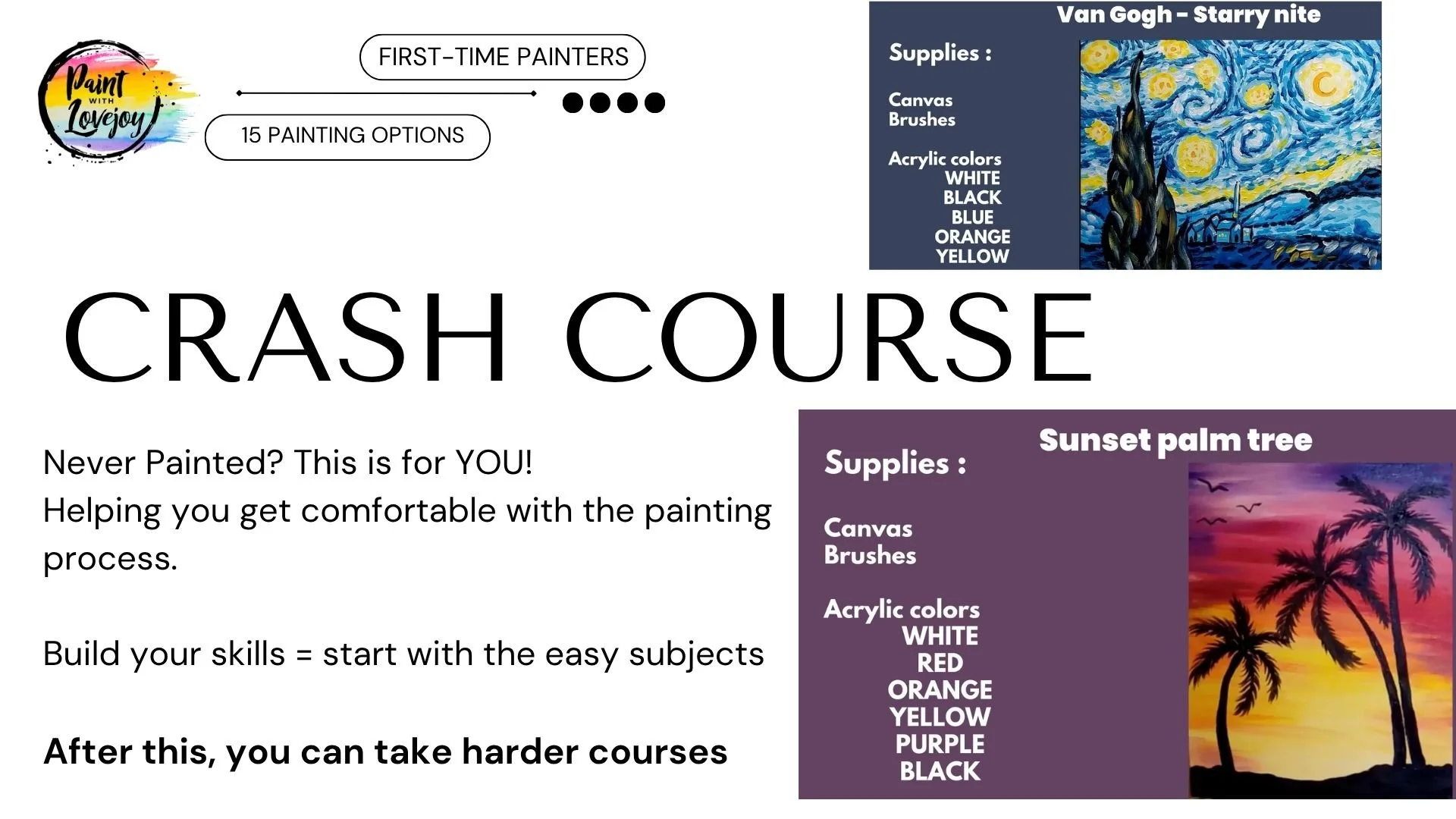
You can begin with a simple canvas, two flat brushes, one small pointed brush, and the acrylic paint colors needed for the project you select.
Use the supplies you already own, even if they are inexpensive beginner supplies.
The purpose of your first set of materials is to help you practice.
As you paint more frequently, you will begin learning which brush shapes you enjoy, which canvas surfaces you prefer, and which paint brands work well for your style.
You can find a straightforward list of recommended materials in my Basic Painting Supplies Guide.
The guide explains the basic surfaces, brushes, and paints you can use without making the process unnecessarily complicated.
Remember, the supplies are only tools.
The creativity comes from what you learn to do with them.
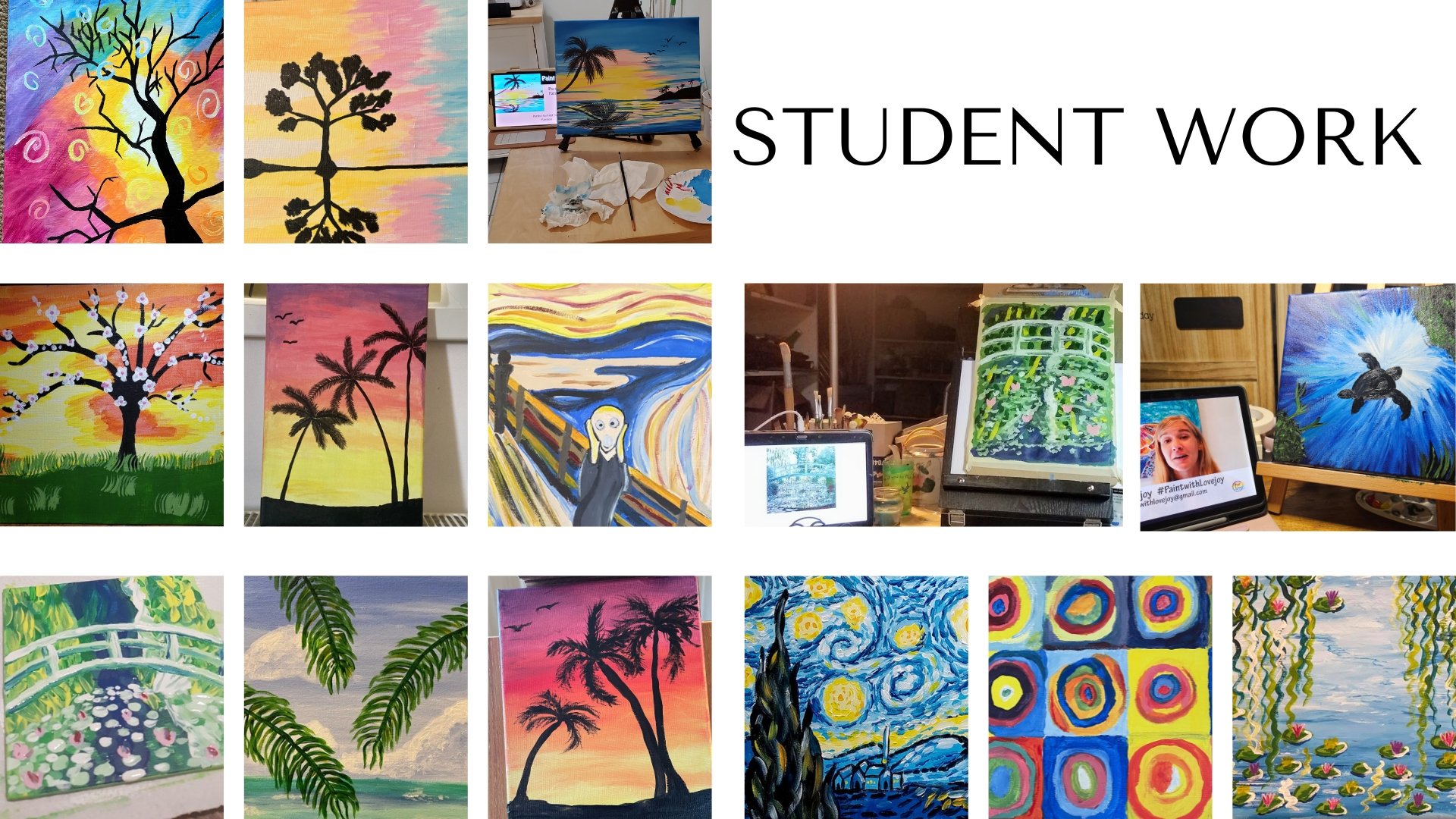
The Moment a Painting Begins to Come Together
Most paintings go through an awkward stage.
The background may be finished, but the main shape still looks flat.
The colors may not seem connected.
You may look at the canvas and wonder whether you have made a mistake.
This is usually the moment when a beginner feels tempted to stop.
But then you add another layer.
You deepen a shadow.
You place a highlight along an edge.
You add a few carefully chosen details.
Suddenly, the separate pieces begin to connect.
The image starts to emerge from the layers of paint.
What looked unfinished twenty minutes earlier begins to look like an actual painting.
That moment is powerful because it teaches you not to judge the painting too early.
It also teaches you to trust the process.
Not every brushstroke needs to look impressive by itself. Each step contributes to the finished piece.
Sometimes you simply need to keep going long enough to see how the layers work together.
Your First Painting Gives You Proof
When you finish your first painting, you may immediately notice things you would change.
That is natural.
Artists at every experience level can look at their work and imagine another choice they could have made.
But your first painting gives you something much more important than perfection.
It gives you proof.
You began with a blank canvas.
You made decisions.
You mixed colors.
You solved small problems.
You continued through the awkward stages.
And you completed a painting.
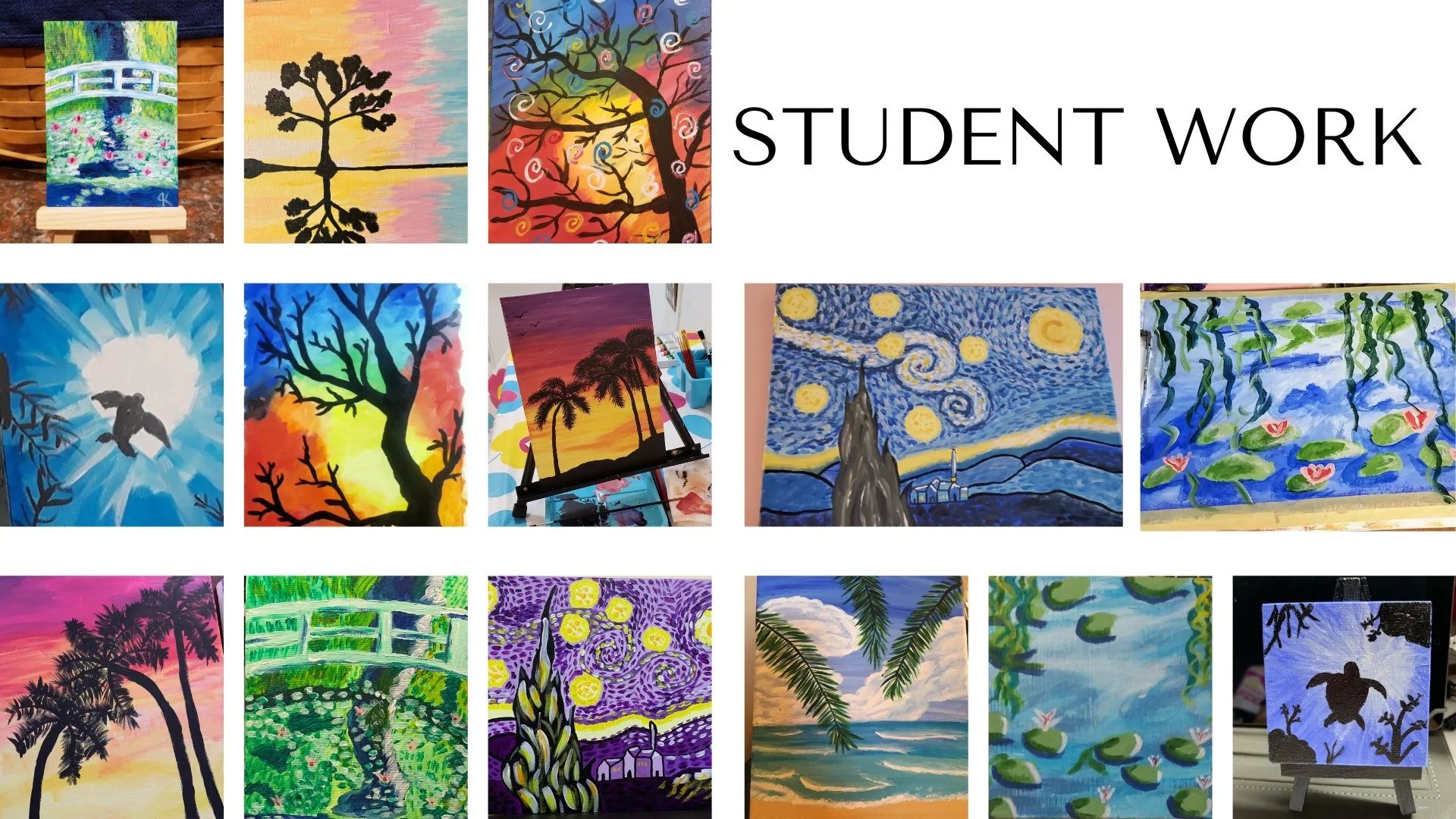
You now have physical evidence that you are capable of learning something new.
That first finished painting makes the next blank canvas less intimidating.
You begin the second project knowing that you have already found your way through the process once before.
With every painting, your hands become more familiar with the brushes. Your eyes begin noticing colors, shapes, shadows, and highlights differently.
You start seeing paintings not as mysterious finished images, but as a series of understandable steps.
Painting Does Not Have to Become Productive
You do not have to become a professional artist.
You do not have to sell your paintings.
You do not have to share your work online.
You do not have to turn your creativity into another business, responsibility, or source of pressure.
Painting can simply be something you do because the experience feels good.
It can be a reason to step away from your phone.
It can be a quiet evening at the kitchen table with music playing in the background.
It can be an afternoon spent painting beside your child, your partner, or a friend.
It can become a small ritual that helps you slow down, focus on what is directly in front of you, and reconnect with a part of yourself that may not receive much attention during everyday life.
The finished canvas is meaningful.
But so is the time you spend making it.
Fifteen Complete Projects for Fifteen Dollars
The complete Beginner Acrylic Painting Crash Course is available for a one-time payment of $15.
There is no monthly subscription.
Your enrollment includes 15 step-by-step painting tutorials, printable traceables, self-paced lessons, lifetime access, and email support from me.
Painting supplies are not included, but you can use materials you already have or start with a few affordable basics.
For less than the cost of many individual painting classes, you receive 15 complete projects that you can work through and revisit whenever you are ready.
Where Your Painting Journey Can Take You
The crash course is a comfortable place to learn the foundations, but it does not have to be the end of your creative experience.
After completing the projects, you may feel ready to follow additional tutorials or begin exploring subjects that are personally meaningful to you.
You can find more online painting resources through Paint with Lovejoy.
Animal lovers can take the next step with the Online Paint Your Pet Course, which teaches you how to transform a favorite photograph of your pet into a meaningful painting.
And those who would enjoy painting in person can explore my beginner-friendly Sedona painting workshops.
Every painting teaches you something.
Every completed canvas makes the next one easier to begin.
You do not need to know exactly where your creative journey will take you.
You only need a place to start.
You Do Not Need to Feel Ready
Many people wait to feel creative before they begin.
They wait to feel confident.
They wait for the perfect supplies, the perfect workspace, or a free weekend with nothing else demanding their attention.
But confidence rarely arrives before action.
Confidence develops because you begin.
It develops when you dip a brush into paint and make the first mark.
It develops when a color does not turn out exactly as expected, but you adjust it and continue.
It develops when you finish a painting and realize that the blank canvas was never asking you to be perfect.
It was simply inviting you to participate.
Your first painting does not have to prove that you are talented.
It only needs to remind you that you are capable of learning.
The Beginner Acrylic Painting Crash Course gives you 15 opportunities to practice, experiment, and discover what you can create.
You do not need to arrive feeling like an artist.
You only need to be willing to begin.
You can learn more and receive lifetime access to the complete course at Lovejoy Creations.
All of the links mentioned in this audio blog are included below.
Links Mentioned
Beginner Acrylic Painting Crash Course