The Easiest Online Acrylic Painting Course for Complete Beginners
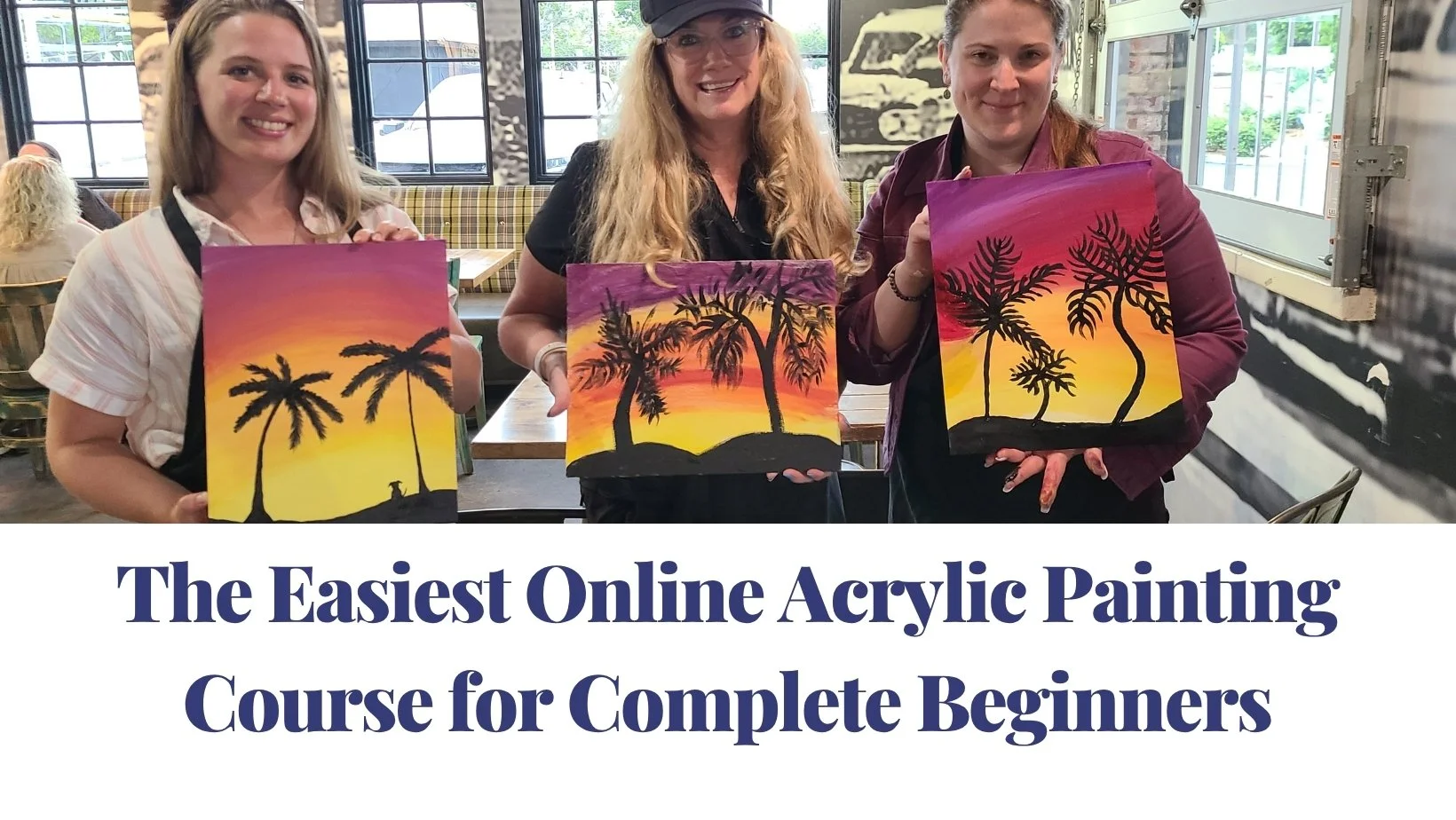
If you have never painted before, learning acrylic painting can feel much more complicated than it really is.
You walk into an art store and see walls of brushes, rows of paint colors, different types of canvases, mediums, palettes, and tools you have never used. Then you go online looking for help and find thousands of painting tutorials, many of which seem to assume you already understand the basics.
How much paint should be on the brush? Should you wet the brush first? How do you blend acrylic paint before it dries? Which colors should you mix? What happens if you make a mistake? And how do you take a completely blank canvas and somehow turn it into a finished painting?
Those questions are completely normal when you are starting.
You do not need a complicated art education to answer them. You need a comfortable place to practice the fundamentals.
That is why I created the Beginner Acrylic Painting Crash Course, a self-paced online course designed specifically for people who have little or no painting experience.
If you have never painted before, this course was made for you.
A Beginner Painting Course Should Actually Teach Beginners
There is a big difference between showing someone how to copy a painting and teaching someone how to paint.
Many online tutorials move quickly through techniques such as blending, layering, highlighting, dry brushing, or color mixing without explaining what is happening. That may work well for someone who has painted before, but a complete beginner can quickly feel lost.
When you are learning for the first time, you need to understand the process underneath the finished painting.
You need to become familiar with how acrylic paint feels on the brush and how it moves across the canvas. You need to learn how much paint to pick up, how different brush shapes create different marks, how colors interact, and why paintings are generally built from larger areas into smaller details.
You do not need to understand all of that before you begin.
You learn it by painting.
The Beginner Acrylic Painting Crash Course gives you 15 complete step-by-step projects so you can practice those skills repeatedly instead of trying to absorb everything through theory alone.
Each painting gives you another opportunity to become more comfortable with your supplies and another chance to see how a painting develops from an empty canvas into a finished image.
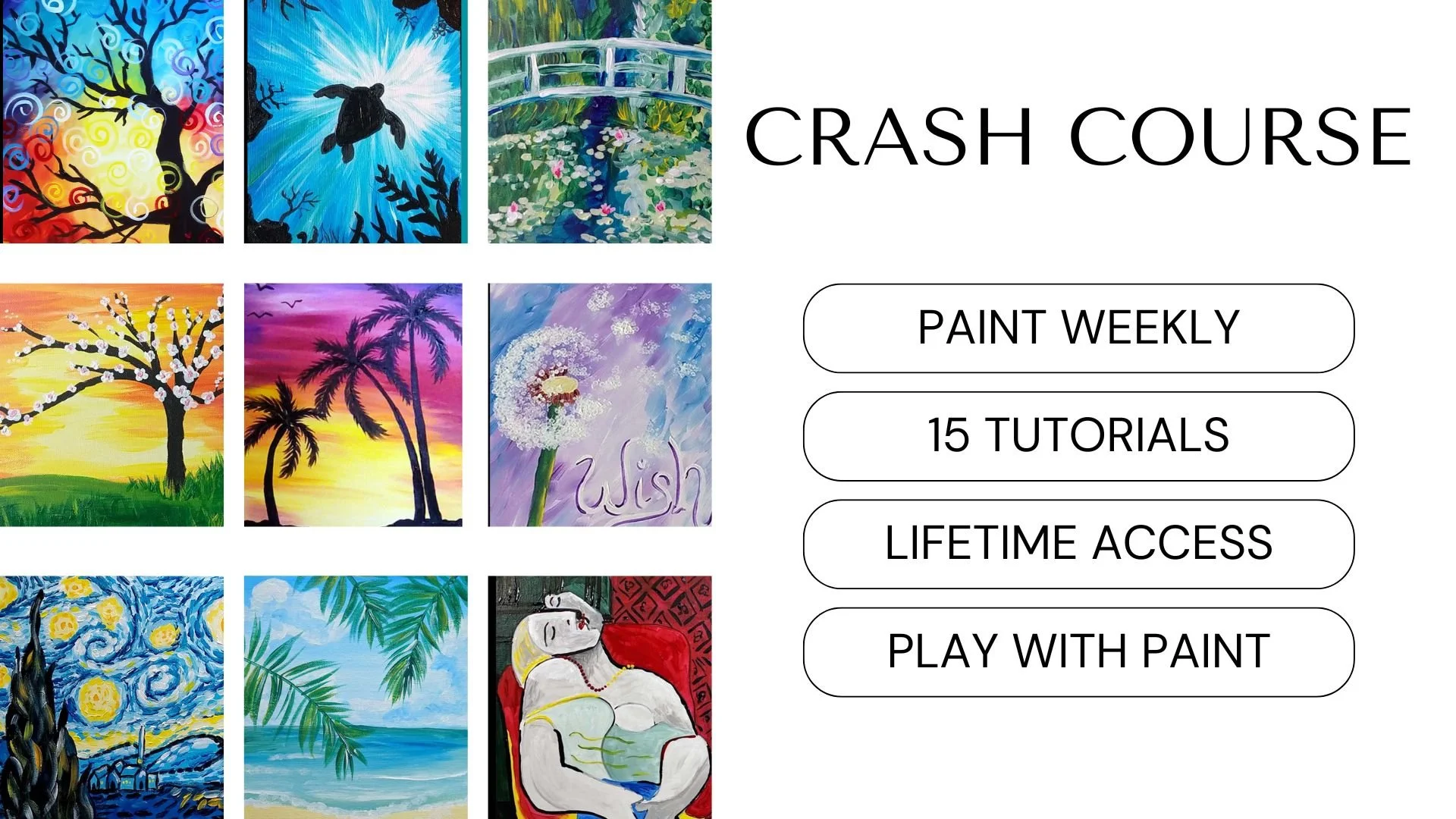
Fifteen Paintings Give You Time to Actually Learn
Your first painting will probably feel unfamiliar.
You may think carefully about every brushstroke. You may wonder whether you have too much paint on your brush or whether the color you mixed is correct. You may pause frequently because you are still learning how everything works.
That is part of the process.
Then you begin another painting.
The brush does not feel quite as strange in your hand. You recognize some of the steps. You remember how you created a certain texture or blended two colors together.
A few projects later, you may notice that things you had to consciously think about during your first painting are starting to become more natural.
That is where confidence actually comes from.
Not from someone telling you that you are artistic, but from seeing evidence that you are learning.
With 15 projects, you have enough repetition to begin developing real familiarity with acrylic paint. You practice color mixing, brush control, blending, layering, composition, and adding details again and again in slightly different ways.
Those skills transfer beyond the individual paintings in the course. Once you begin understanding the basic process, other tutorials become easier to follow and experimenting on your own becomes much less intimidating.
The course gives you a foundation you can continue building on.
You Do Not Need to Know How to Draw
One of the biggest reasons people tell me they cannot paint is because they believe they cannot draw.
But drawing and painting are different skills, and you do not need to master drawing before you learn how to use acrylic paint.
Printable traceables are included with the course projects so you can transfer the basic shapes onto your canvas before you begin painting.
That means you can focus your attention on the skills you are actually trying to learn: using your brushes, mixing colors, creating layers, and understanding how a painting comes together.
There is no prize for making the learning process unnecessarily difficult.
As your confidence grows, you may naturally begin changing shapes, adjusting compositions, using different colors, or eventually drawing more of your own subjects. But you do not have to start there.
You can start with support.
Learning Acrylic Painting Is Easier When You Can Slow Down
One of the biggest advantages of learning through an online course is that no one is rushing you.
If you need extra time to mix a color, take it.
If you want to watch a brush technique again, replay it.
If you need to step away while a layer dries, you can come back later.
There is no class moving ahead while you are still figuring something out and no reason to compare your painting with the person sitting next to you.
The course includes lifetime access, so you can complete the projects at whatever pace works for you.
You might paint once a week and slowly work through the lessons. You might spend a weekend painting several projects. You may finish the course and return months later to repaint one of your favorites.
That second version will probably look different from your first.
And that is a wonderful way to see your own progress.
You Do Not Need an Expensive Art Studio
Another mistake beginners sometimes make is believing they need professional supplies before they are allowed to start.
You do not need an enormous collection of paint or dozens of brushes.
You can begin simply.
A basic canvas, a few acrylic colors, a couple of flat brushes, and a small pointed brush are enough to start learning.
If you already have inexpensive art supplies tucked away in a closet or drawer, use them.
The most important thing at this stage is not having the perfect brush. It is learning what happens when you actually use one.
As you paint more, you will naturally discover what you prefer. You may decide you like a particular type of canvas, brush shape, or paint brand. At that point, buying better supplies makes much more sense because you understand what you are looking for.
I also created a Basic Painting Supplies Guide if you need help putting together a simple beginner setup.
Keep it uncomplicated.
Your goal is to paint.
Your Painting Will Probably Look Strange Halfway Through
This is something I wish every beginner knew before starting.
Most paintings have an awkward stage.
You have painted the background and added some of the larger shapes, but the highlights are not there yet. The shadows are not deep enough. The smaller details have not been added.
The painting may look flat or strange, and it is very easy to assume you have done something wrong.
You probably have not.
You are simply halfway through a painting.
Then another layer is added. A shadow becomes darker. A highlight creates dimension. A few small brushstrokes suddenly make the subject recognizable.
The painting begins to come together.
Learning to keep going through that awkward middle stage is an important part of becoming a painter.
You begin to understand that every individual brushstroke does not need to look perfect. A painting is built through layers and adjustments.
You can change things.
You can paint over things.
You can keep working.
That realization takes an enormous amount of pressure off the process.
The Goal Is Not a Perfect Painting
Your first painting is not supposed to prove that you are talented.
It is supposed to teach you something.
Maybe you learn that you enjoy mixing colors.
Maybe you realize that you prefer a larger brush.
Maybe you discover that you need less paint than you expected.
Maybe you make a mistake and then discover that acrylic paint is surprisingly forgiving because you can let an area dry and paint over it.
Every project teaches you something you can use in the next one.
By the time you have completed several paintings, you begin looking at artwork differently. Instead of seeing one complicated finished image, you start recognizing backgrounds, shapes, layers, shadows, highlights, and details.
Painting becomes less mysterious.
That is one of the most important things a beginner course can give you.
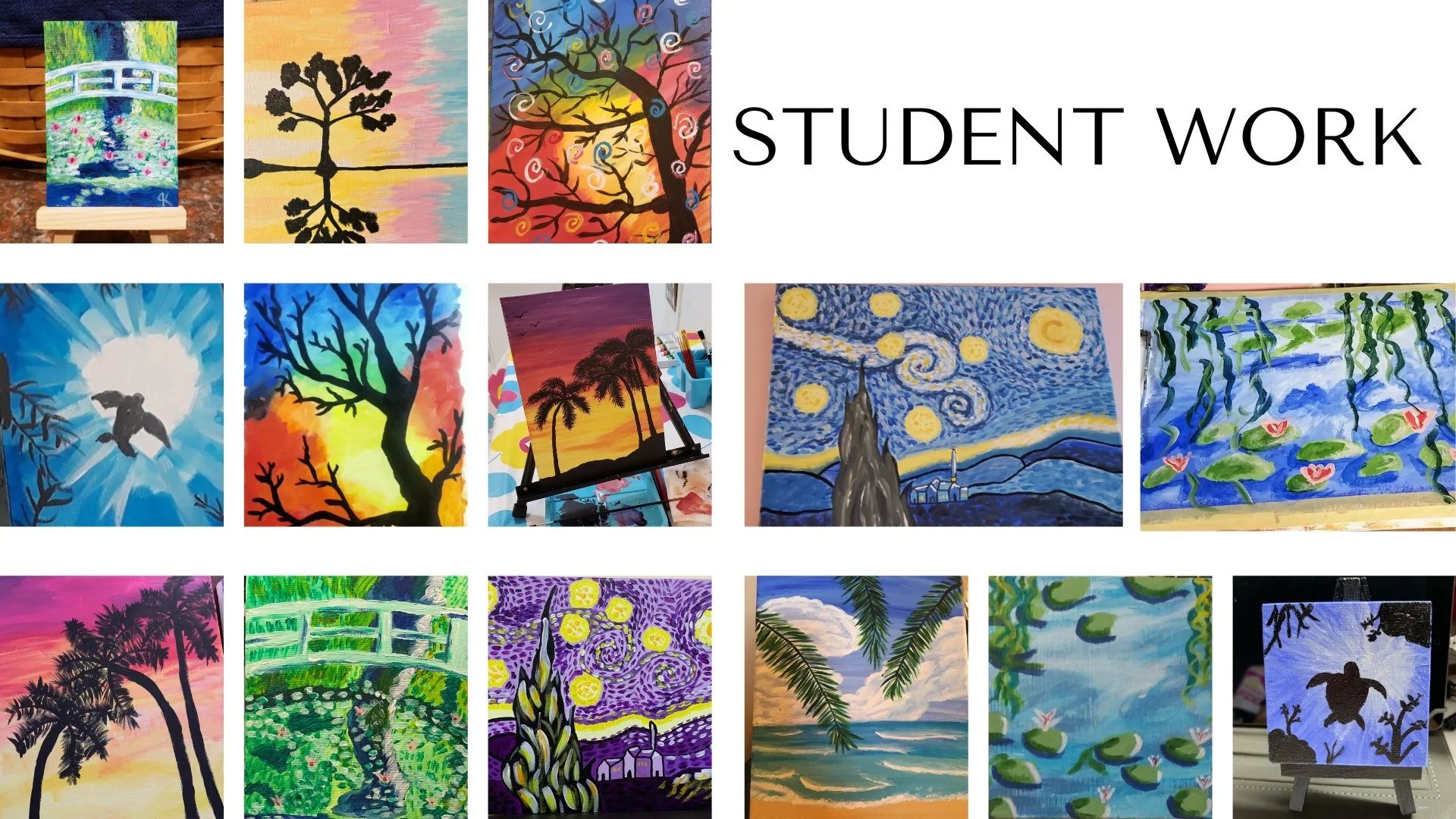
Designed by Someone Who Has Taught Beginners for Years
I have spent more than 20 years helping first-time and beginner painters create artwork they did not believe they could make.
One thing I have learned from teaching beginners is that most people do not need more pressure.
They need clear instructions, manageable steps, practice, and encouragement.
They need someone to remind them that an awkward brushstroke is not a disaster and that a painting does not need to look finished when it is only halfway done.
That philosophy is built into this course.
I am not expecting you to arrive knowing how to paint. Learning those skills is the reason you are taking the course.
And if you have a question while you are working, you can reach out to me through the course and send a photo of your painting for feedback.
You may be learning at home, but you are not completely on your own.
A Low-Cost Way to Find Out If You Love Painting
Learning a new creative skill should not require a huge financial commitment.
The complete Beginner Acrylic Painting Crash Course is available for a one-time payment of $15.
You receive 15 complete step-by-step painting projects, printable traceables, lifetime access to the lessons, and support from me when you have questions.
There is no monthly subscription and no deadline for completing the course.
That makes it an easy way to finally explore something you may have wanted to try for years without investing hundreds of dollars in classes or supplies.
You can simply begin.
What Can You Do After You Learn the Basics?
Once the fundamental skills start feeling familiar, painting opens up.
You may begin following other tutorials and notice that the instructions suddenly make more sense.
You may start changing colors instead of copying the example exactly.
You may feel more comfortable walking into an in-person painting class because you already understand how the supplies work.
Eventually, you may want to paint subjects that mean something personally to you.
If you love animals, you can build on your foundational skills with my Online Paint Your Pet Course, where you can learn how to transform a favorite photograph into your own pet painting.
You can also explore additional tutorials and painting resources through Paint with Lovejoy.
And if you are visiting Sedona and would like to experience painting in person, you can join one of my beginner-friendly Sedona painting workshops.
The crash course is not meant to teach you every technique in the art world.
It is meant to give you a strong enough foundation that you feel comfortable continuing to learn.
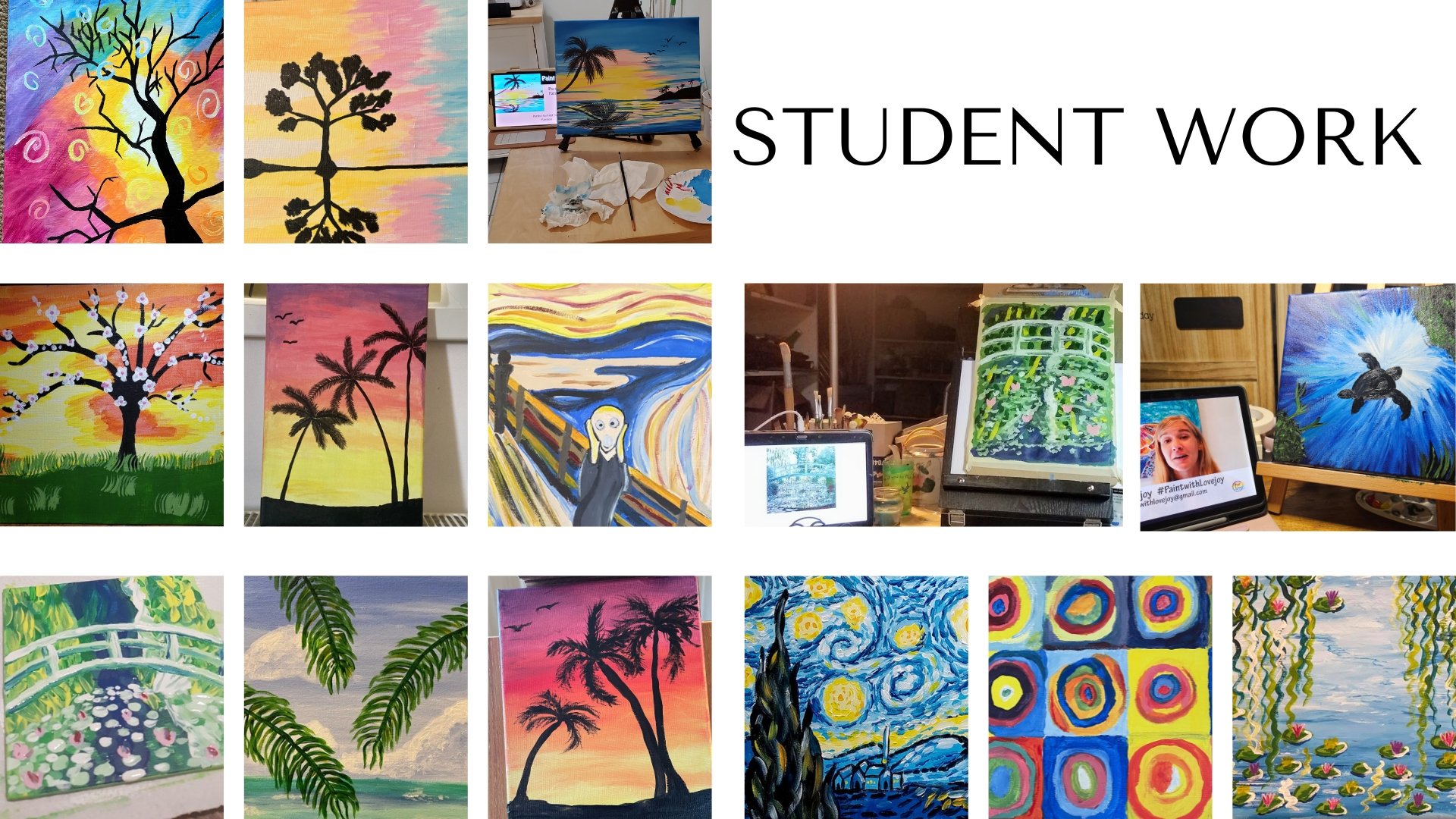
If You Have Never Painted Before, Start Here
The best acrylic painting course for a complete beginner should not make painting feel more complicated.
It should make painting feel possible.
It should help you understand your supplies, practice the fundamental skills, complete real paintings, and become comfortable enough to keep going.
That is what I designed this course to do.
You do not need drawing experience.
You do not need expensive supplies.
You do not need to feel creative before you begin.
You just need to make your first brushstroke.
Then another.
And another.
Fifteen paintings later, you may look back at your first canvas and realize just how much you have learned.
Start the Beginner Acrylic Painting Crash Course and get lifetime access to all 15 projects for $15.
If you have never painted before, that is not a disadvantage.
It is simply your starting point.